How to Make a Quiet Evening Routine That Actually Sticks
"When did winding down become another performance?"
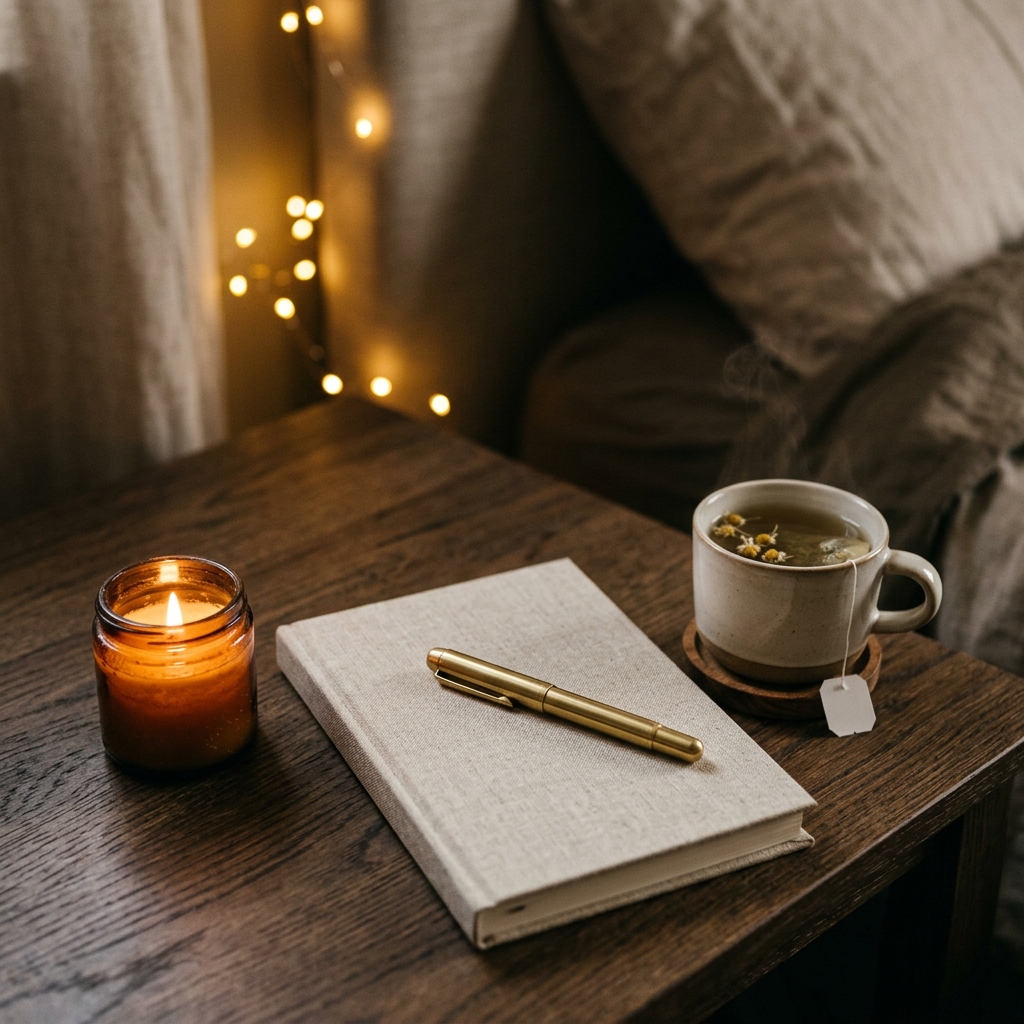
I was standing in front of my open pantry at 9:45 PM, staring at a box of chamomile tea as if it held the secrets to the universe, while simultaneously trying to remember if I had replied to a message about a project due the next afternoon. My phone was warm in my pocket, buzzing with a low-level anxiety that I had carried home from the office. I had a notebook full of "evening routine" ideas—things I had printed out or saved on Pinterest that involved silk sleep masks, journaling prompts, and ten-minute stretches. But looking at the list, it felt less like a path to sleep and more like a second shift.
It was a list of demands. Write down three things you did well. Do a facial massage. Drink water. Read fifteen pages. Meditate.
When did winding down become another performance?
I realized that night, as the kettle began to hum, that I was treating the end of my day the same way I treated the beginning: as a series of targets to hit. I was trying to optimize my rest, which is a bit like trying to run a sprint while asleep. The moment a routine feels like something you can fail at, it ceases to be rest. It becomes admin.
So, I threw out the list.
Instead of a routine, I started thinking about a rhythm—something that could bend depending on how tired I was, rather than a rigid set of rules that made me feel guilty when I fell asleep on the couch at 9:30 PM.
Here is what I kept, and what actually stayed:
The Ten-Minute Transition
The hardest part of the evening is not falling asleep; it is stopping. We spend all day moving at one speed, and then expect our brains to pull a handbrake turn because the clock says 10:00 PM. Now, my routine starts with a simple physical marker. I close my laptop, slide it into my bag, and put my phone on the charger in the kitchen. Not the bedroom.
This ten minutes is not about being productive; it is about signaling to my body that the shift is over. I wash my face, not with a twelve-step serum process, but just with warm water and a soft towel. It is a boundary.
One Small Comfort
I kept the tea. Not because it has magical sleep-inducing properties, but because holding a warm ceramic mug requires two hands. You cannot scroll while holding a hot mug of tea—not easily, anyway. It forces a pause. Sometimes I sit on the kitchen counter and look out the window at the dark garden. Sometimes I just listen to the quiet house. It is three minutes of doing absolutely nothing, and it is usually the only three minutes of the day that feel entirely mine.
If you find yourself rushing past the quiet parts of your day, join Quietly, Evelyn by email. I send short notes on gentler routines, quieter weeks, and the kind of small shifts that actually help.
Start with the free guide, 5 Small Things I Do Each Week to Feel More Like Myself, or begin at Start Here.
The Book on the Nightstand
If I have energy, I read. If I don't, I don't. The rule is simply that the book must be fiction, and it must be physical. No screens. If I only read two pages before my eyes grow heavy, that is a victory. It is not about finishing the book; it is about giving my mind a quiet corridor to walk down before the lights go out.
Some nights, the kitchen is still messy. Some nights, I forget to charge my phone in the kitchen and it ends up next to my bed. But the difference is that I no longer view these nights as failures. A quiet evening is not a perfect evening; it is simply one where you allowed yourself to stop.
What is the one thing on your evening checklist that actually feels like a chore, and what would happen if you just didn't do it tonight?
Warmly,
Evelyn





No comments:
Post a Comment