Book vs. Movie: Which Tells the Story Better?
A film has two hours. A book has as long as it needs. That difference shapes everything.
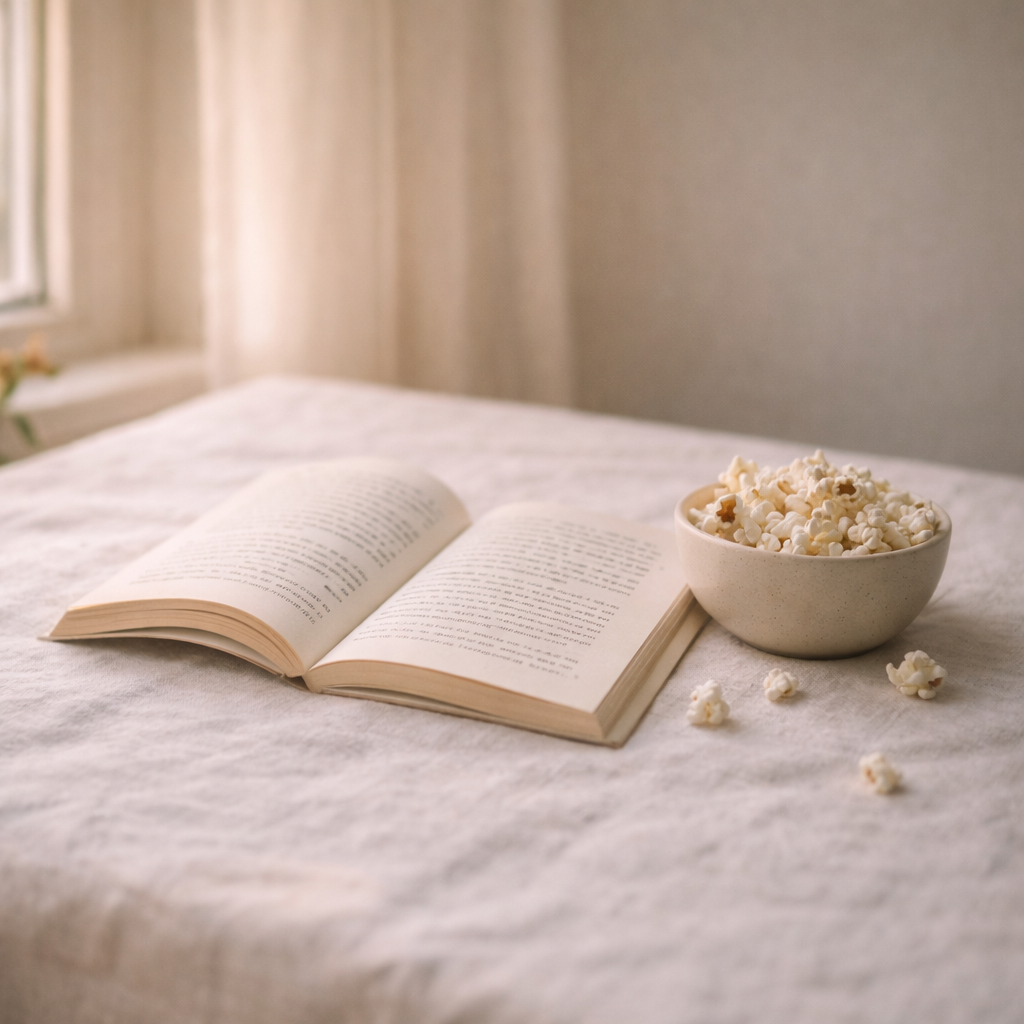
There's a conversation that starts almost every time someone mentions they've seen the adaptation of a book they loved. Someone at the table says the book was better. Someone else says the film was better, actually. And then everyone has a very strong opinion about a third thing that was changed unnecessarily, and the conversation goes on much longer than anyone expected.
I've had this conversation more times than I can count. I've been on both sides of it. And the more I think about it, the less interested I am in which is definitively better, and the more interested I am in why we feel so strongly that one of them must be.
What a book can do that a film cannot
A book lives inside a character's head. The interiority — the doubt, the contradiction, the thought that arrives three hours after an argument — is the medium. A novelist can spend a paragraph on a feeling that would take a film thirty seconds of screen time to approximate, and often approximate badly.
There's also time. A novel can take four hundred pages to earn a moment. The reader arrives at that moment having accumulated everything the writer built toward it. A film has roughly two hours and a audience that came in off the street with no preparation. The moment has to land immediately or not at all.
Neither of these is a flaw. They're just different instruments.
What a film can do that a book cannot
A film can show you a face. This sounds small but it isn't. A character you've been imagining in your own terms — assembled from fragments of description and whatever your brain decided to fill in — suddenly exists, fully and specifically, in the body of a particular actor. That's an irreversible experience. Whether it improves on your version or doesn't, it changes it permanently.
Film also collapses time in ways that serve certain stories better than the written form. A montage of seasons, a single tracking shot through a city at night, a piece of music placed over a scene — these create feeling through accumulation in seconds rather than pages. For some stories, that compression is exactly right.
Why we feel protective of the book
I think it's partly about ownership. When you read a book, you build something. The version that exists in your head is yours — assembled from the writer's words and your own experience, memory, imagination. It feels personal in a way that a shared cinema screen doesn't.
When a film adaptation changes something, it isn't just a creative decision. It's a revision of something you made. Of course that feels personal. Of course you have opinions about it.
The honest answer
Some stories belong on the page. The things that make them work — the internal voice, the accumulation of detail, the slow build of meaning — don't translate. The Road is a novel. Its power is in McCarthy's sentences. The film is fine. It is not the same experience.
Some stories belong on screen. Mad Max: Fury Road is pure cinema. It would be a different and lesser thing as a novel. The medium is part of the meaning.
And then there are the ones where the adaptation does something genuinely interesting with the source material. Where the constraints of the new form force a creative solution that reveals something the original hadn't considered. Those are rare. But they exist. And they're worth celebrating when they do.
Is there an adaptation that surprised you — either because it was better than you expected, or because it changed something in a way that actually worked? I'd love to hear which ones have stayed with you.
Warmly, Evelyn





No comments:
Post a Comment