Twelve Steps from the Bedroom
Burnout doesn't arrive dramatically. It just creeps in quietly, through accumulated smallness.
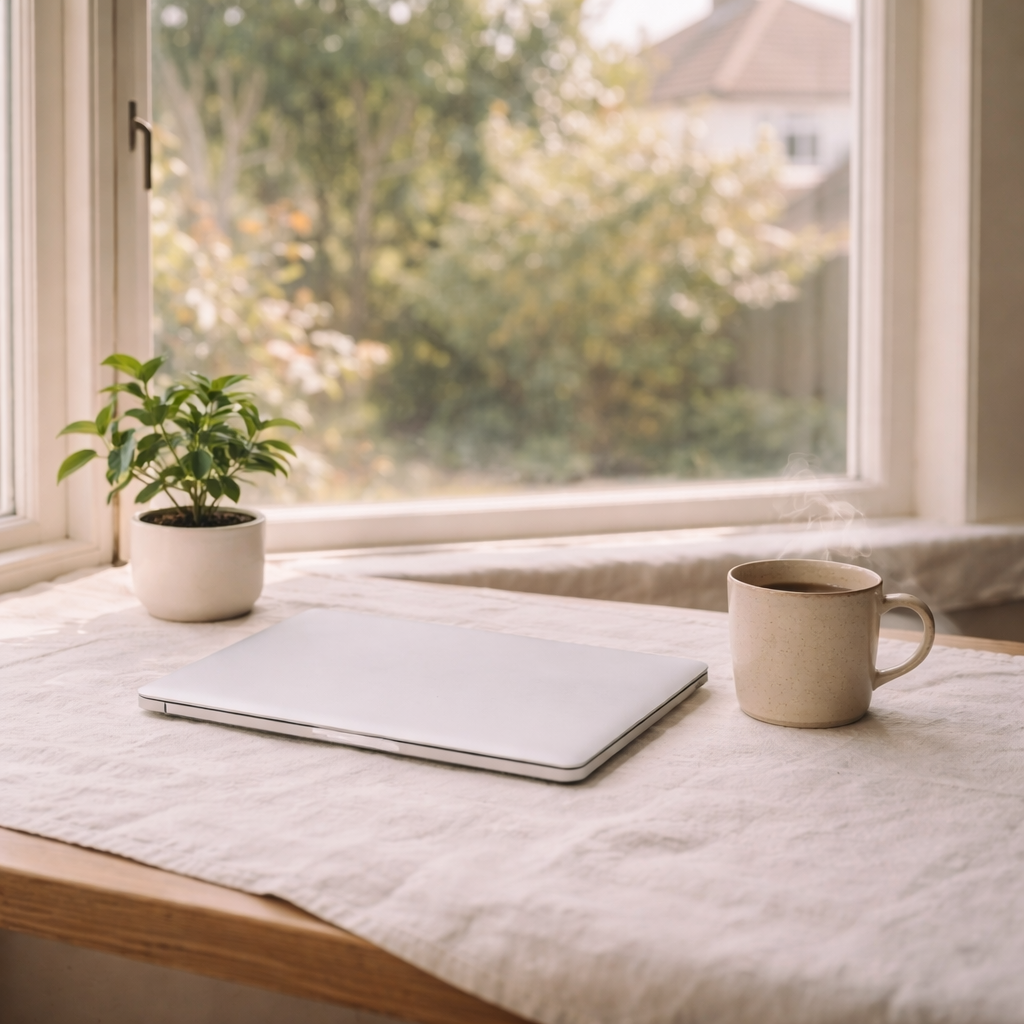
The desk was the dining table. The commute was twelve steps from the bedroom. The boundaries between work and not-work were, to put it diplomatically, theoretical at best.
I'd imagined working from home would feel like freedom. And in some ways it did. But mostly, in the beginning, it felt like being at work all the time, because I was. There was always something that could be done. The laptop was right there. The line between the end of the day and the start of the evening became increasingly difficult to locate, and then eventually I stopped looking for it.
This is how burnout arrives. Not dramatically. Just quietly, over time, through accumulated smallness.
What mindfulness actually fixed
Not everything. I want to be honest about that. Mindfulness didn't reorganise my schedule or make my inbox smaller or solve the specific problem of working from a flat where every room was also an office. What it did was give me a way to interrupt the pattern. To notice, in the middle of a frantic hour, that I was frantic, and to do something small about it before it compounded.
That noticing is more valuable than it sounds. A lot of the difficulty with remote work isn't the work itself. It's the story running alongside it, the constant low-level narration about what's still undone, what should have been finished earlier, what's going to need attention tomorrow. Mindfulness doesn't silence that narration. But it does help you stop living inside it quite so completely.
The transition that doesn't exist
Office workers have a commute. Inconvenient as it often is, it serves a function: it's a transition, a gap between one mode and another. Remote workers don't have that, and most of us don't replace it with anything, so we move directly from work to not-work without any buffer in between and then wonder why we feel like we never fully left.
Creating a small ritual at the end of the working day helps more than almost anything else I've tried. It doesn't have to be elaborate. Closing the laptop and making tea. A short walk around the block. Ten minutes outside before dinner. Something that signals, to yourself as much as anyone, that the working part of the day is done.
Your nervous system takes its cues from what you do, not what you intend. Give it something to work with.
Small practices, used consistently
The breath is always available. That sounds almost embarrassingly simple, but there's a reason it appears in every mindfulness practice that's ever existed. When things get frantic, three slow deliberate breaths change something. Not dramatically. Just enough.
I also started building very small pauses into the day. Between one task and the next, before opening email, before a call. Not long ones. Just the length of a cup of tea, sometimes. But that brief gap between one thing and the next is where the day starts to feel less like a sprint and more like something you're choosing to move through.
The workspace matters too
When your home is also your office, the visual environment carries more weight than it usually would. A desk that's always covered in work things is a constant low-level reminder that there's work to do. Tidying it at the end of the day, putting things away, even just closing the laptop, changes what the room feels like when you come back to it in the evening.
Small adjustments. They accumulate into something that feels like having two places again, even in one.
If you work from home, how do you draw the line between work and the rest of your day? I'm still figuring out what works best, and I'd genuinely love to hear what's helped you.
Warmly, Evelyn





No comments:
Post a Comment